
Magnesium
The lightest structural metal, and one of the most strategically important critical minerals of the modern era.
Light, strong, and endlessly recyclable.
Magnesium is the lightest structural metal - 33% lighter than aluminum and 75% lighter than steel - with a favorable strength-to-weight ratio.
Its alloys offer high heat transfer, vibration damping and electromagnetic-interference reduction, making them ideal for high-performance, precision applications.
Primarily used across automotive and aerospace for frames, engine components and more.
Used in Thixomolding and Giga-casting to efficiently produce large, lightweight alloy components in a single process.
Also used in chemical applications - marine flares, and as salts in foods and fertilizers.
Fully recyclable: secondary production uses only ~5% of the energy of primary magnesium alloy, offering a strong sustainability profile.
Where magnesium matters.

Aerospace
Airframes, housings and engine components where every gram matters.
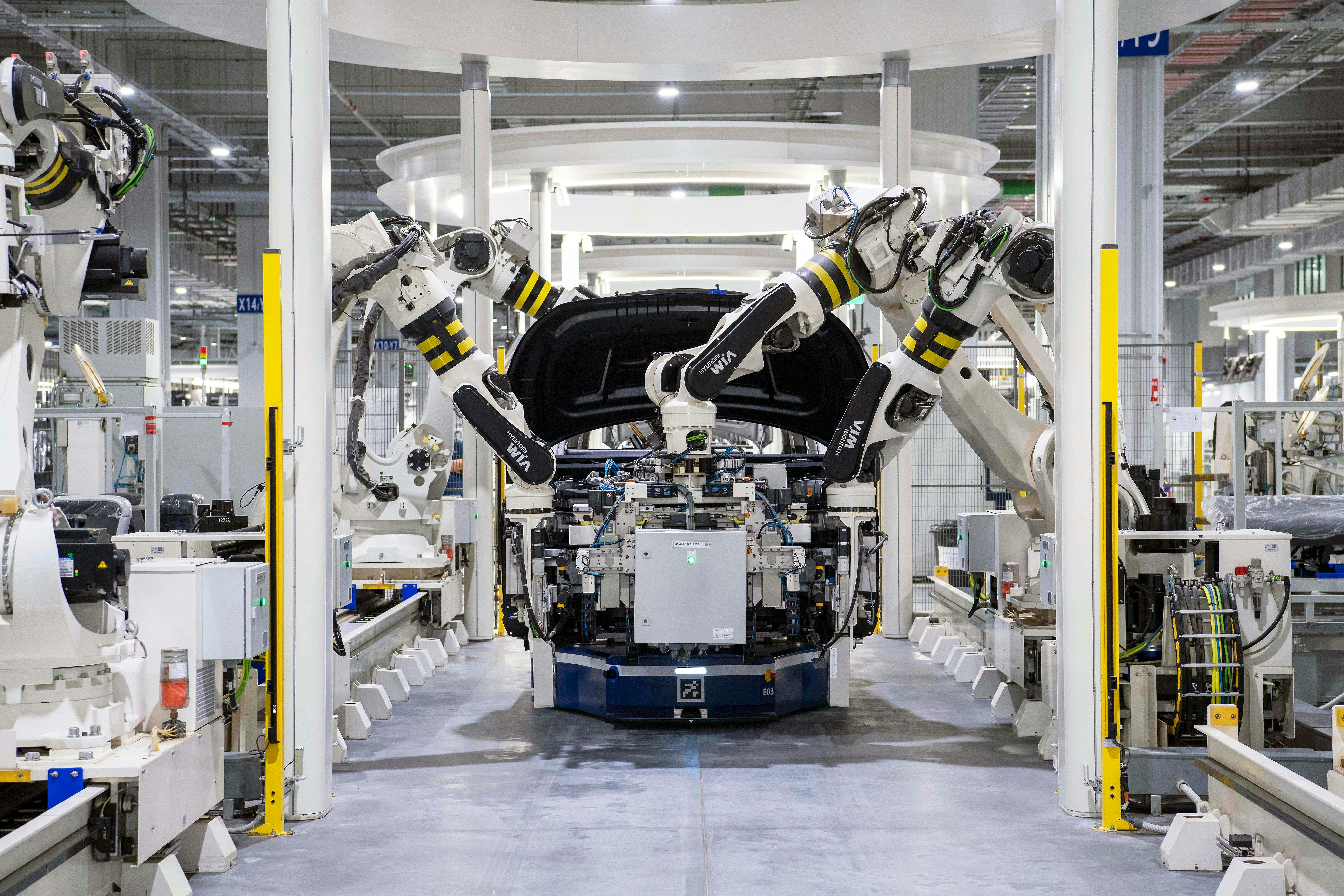
Automotive & EV
Giga-cast structures and lightweight frames for the electric era.
Alloys & Casting
Thixomolded and die-cast precision parts at production scale.

Defense & Tech
Dual-use critical mineral for strategic industrial supply.
A critical mineral with a fragile supply chain.
Magnesium is critical for industrial and military applications and appears on the critical-minerals lists of both the US Geological Survey and the European Commission.
Production is among the most geographically concentrated of any commodity. China alone accounts for nearly 90% of world magnesium metal production.
In 2021, the last US producer idled operations at the Great Salt Lake project, one of the most polluted industrial sites in North America.
Per the USGS, the US imports over 75% of its magnesium, and demand is rising across aerospace, automotive and defense.
With effectively zero domestic production, a US-based, high-purity source is a matter of strategic supply security.
The industrial workhorse of magnesium, and Whitemoon’s first product.
One ore. One kiln. Many markets.
Magnesium oxide - magnesia - is produced by calcining magnesite, the mineral Whitemoon owns. Heating drives off CO₂ and leaves a white, high-purity oxide.
MgO melts at 2,852°C, among the highest of any common material and the reason the world’s steel, cement and glass furnaces are lined with it.
One ore body serves multiple markets by calcination temperature alone: caustic-calcined magnesia for agriculture, environment and chemicals; dead-burned magnesia for refractories; fused magnesia for premium electrical and refractory applications.
Formed into MgO board, the same oxide becomes a non-combustible alternative to gypsum drywall: it does not burn, resists water and mold, and can lift the fire rating of a wall or roof assembly - increasingly specified as building codes tighten in wildfire and high-density zones.
Where MgO matters.
Refractories
Furnace linings for steel, cement and glass: magnesia’s largest global market.
Construction
Fire-resistant MgO board and panels for modern building systems.
Agriculture & Environment
Animal feed, fertilizer, water treatment and flue-gas scrubbing.
Metal Feedstock
The direct input for thermal-reduction magnesium metal: the bridge from MgO to Mg.
The same fragile chain, one step upstream.
China dominates global magnesia supply, and environmental curtailments have repeatedly tightened exports and lifted prices.
The United States has a single producer of magnesia from domestically mined ore, and imports the balance of its needs.
Every tonne of domestic MgO capacity shortens the same supply chain that magnesium metal depends on - which is why Whitemoon’s strategy begins with MgO: revenue first, metal as the next step.
Whitemoon ore to 99.9% pure magnesium metal, on US soil.
Whitemoon Magnesium has successfully completed lab testing with US-based Big Blue Technologies, using their proprietary Aluminothermal Reduction (ATR) process to convert Whitemoon ore into 99.9% pure magnesium metal.
The ATR process reacts a magnesium-bearing ore (MgO or MgO-CaO) with aluminum to produce metal plus a value-add byproduct. With MgO, magnesium aluminate spinel is co-produced, a material critical to high-performance refractories. With MgO-CaO, the byproduct is calcium aluminate, used in cement and advanced building materials.
- Low energy use
- High material efficiency
- Automation to enhance safety
- Value-add byproducts
 Lab testing partner - Big Blue Technologies, Colorado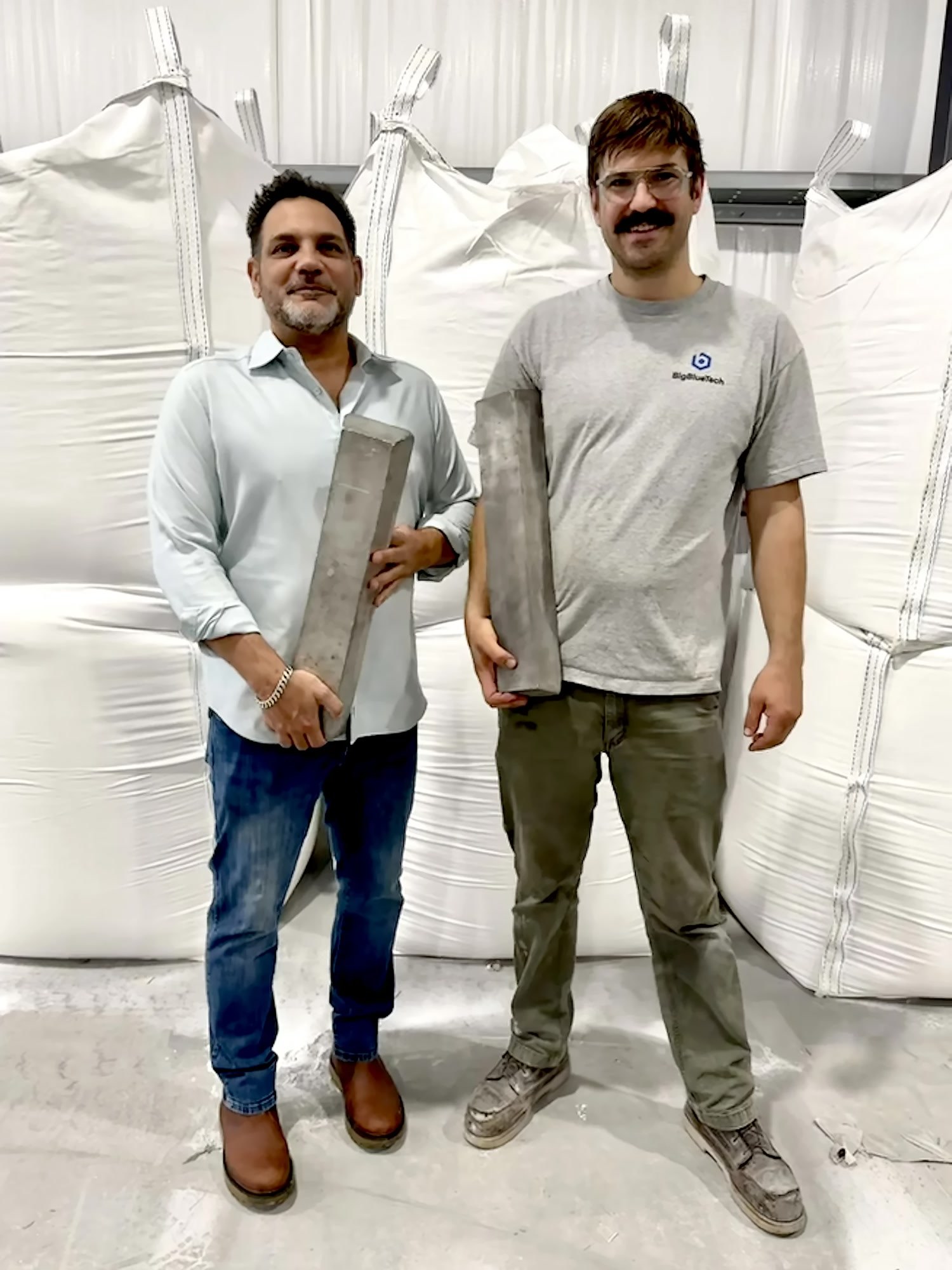
Magnesium metal produced from Whitemoon ore at Big Blue Technologies, lab scale.
Source: Big Blue Technologies. Byproduct varies with feed - magnesium aluminate spinel from MgO, calcium aluminate from MgO-CaO.